Source Above Ground Pool Vacuum Cleaner for Gym, Garden, Bathroom
Compare 30 Above Ground Pool Vacuum Cleaner options with flexible or fixed designs, plastic materials, and customization features. Buyers can review specifications like voltage, weight, and packing details from suppliers in China and the USA.
Key considerations
Products List


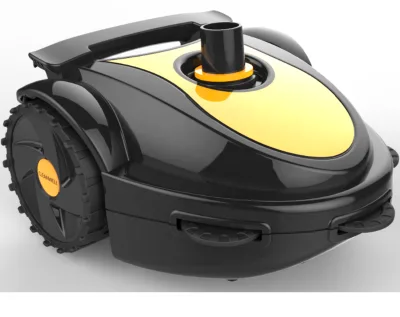
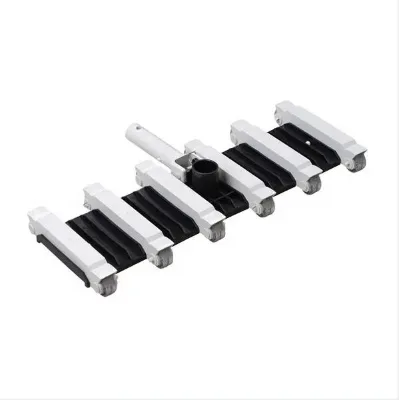

Pool Intelligent Cleaning Robot Swimming Pool Underwater Vacuum Cleaner
$290.00 - $390.00
MOQ: 1 Pieces

Advanced Automatic Inground Pool Vacuum Cleaner for Effortless Cleaning
$91.80 - $102.00
MOQ: 10 Pieces



Comprehensive Sourcing Guide
Strategic Sourcing Guide for Above Ground Pool Vacuum Cleaners
Procuring equipment for the maintenance of above-ground swimming pools requires a nuanced understanding of the specific mechanical and operational constraints inherent to these structures. Unlike in-ground systems, above-ground pools often have varying wall heights, flexible liners, and specific filtration setups that dictate the design of the vacuum head and its propulsion mechanism. The market presents a diverse array of options ranging from manual heads to automated robotic units, each serving distinct operational needs. This guide synthesizes available product attributes and industry standards to assist procurement professionals in identifying suitable solutions without relying on unverified marketing claims.
Technical Specifications and Operational Compatibility
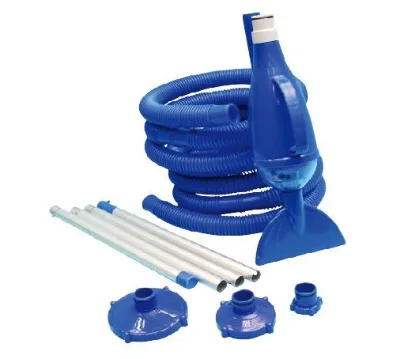
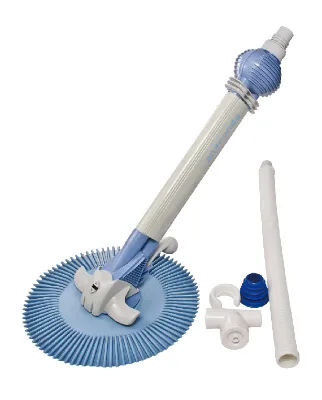
The primary technical differentiator for pool vacuum cleaners is the method of propulsion and the design of the cleaning head. The observed product landscape includes both manual and automated variants. Manual units are characterized by their simplicity and reliance on the pool's existing filtration pump for suction. These units often feature a "Cleaner with Handle" design, allowing the operator to maneuver the device manually across the pool floor. The material composition is predominantly plastic, selected for its resistance to corrosion and durability in wet environments. Specific product models indicate a "Flexible/Fixed" type classification, suggesting that the vacuum head may be designed to adapt to pool contours or remain rigid for specific floor types.
For automated solutions, the technical requirements shift significantly. These units often operate on specific voltage inputs, with observed specifications citing an input voltage of 220V and an output voltage of DC 29V. The power consumption for such automated units can reach up to 450W, indicating a robust motor capable of sustained operation. A critical specification for automated cleaners is the cable length; observed data points to a wire length of 40 meters, which is essential for covering the surface area of larger above-ground pools without requiring the unit to be repositioned frequently. The working temperature range for these electronic components is typically cited between 10 and 35 degrees centigrade, a factor that buyers must consider when sourcing for facilities in varying climates.
| Feature Category | Manual Vacuum Attributes | Automated Vacuum Attributes |
|---|---|---|
| Propulsion Type | Manual (Handle operated) | Remote Control / Automated |
| Power Source | Pool Pump Suction | Electric Motor (220V Input) |
| Power Rating | N/A (Dependent on pump) | Up to 450W |
| Cable Length | N/A (Hose dependent) | 40 Meters observed |
| Material | Plastic | Plastic / Electronic Housing |
| Weight | Approximately 4.5 kgs | Varies by model |
| Voltage Output | N/A | DC 29V |
Compliance and Certification Verification
When sourcing pool cleaning equipment, verifying compliance with international safety and quality standards is paramount. The supply chain for these products often originates from manufacturing hubs in China, specifically regions like Guangdong Province, Guangzhou, and Zhejiang. However, the market also includes products originating from the USA, necessitating a rigorous verification of the "Place of Origin" to ensure the product meets the specific regulatory requirements of the buyer's region.
Certification status is a critical factor in procurement. Observed product data lists several recognized standards, including CE, SGS, and ISO900. The CE mark indicates conformity with health, safety, and environmental protection standards for products sold within the European Economic Area. SGS certification often relates to testing and verification services, ensuring the product meets specific quality benchmarks. ISO900 refers to quality management systems, suggesting the manufacturer has a structured approach to maintaining product consistency. Buyers must explicitly request current certification documents rather than relying on product listings that may contain outdated or unverified claims. Additionally, some product specifications mention "Custom dimension" as a standard, which implies that the manufacturing process can be adapted to specific pool sizes, but this requires clear communication of technical drawings to the supplier to ensure the final product fits the intended application.
Cost Drivers and Pricing Structures
The pricing for above-ground pool vacuum cleaners is influenced by a complex matrix of factors, including automation level, material quality, and customization requirements. The observed price range in the market spans from 2.35 USD to 12,000 USD. This vast disparity highlights the difference between simple, manual plastic vacuum heads and fully automated, high-power robotic units with advanced electronics.
Several specific cost drivers impact the final unit price. First, the level of customization is a significant factor. Products offering "Custom Logo" and "Custom dimension" capabilities often command a premium due to the additional tooling and setup costs involved. Second, the complexity of the electronic components in automated units, such as the 450W motor and 40-meter cable systems, drives up the manufacturing cost compared to manual counterparts. Third, packaging requirements influence logistics costs. While some units are packed in simple cartons, others require specialized packaging such as "Wrapped with Bubble Film" or specific carton sizes like 905050cm to protect delicate electronic components during transit.
Minimum Order Quantity (MOQ) also plays a role in the effective cost per unit. The observed MOQ range varies from 1 to 616 units. A lower MOQ allows for smaller initial investments and testing of the product in the market, while higher volume orders may negotiate better unit pricing but require significant capital outlay. Buyers should analyze their projected sales volume against the MOQ to determine the most cost-effective procurement strategy.
Typical Applications and Usage Scenarios
The versatility of pool vacuum cleaners is evident in the diverse range of occasions and applications listed in the product data. While the core keyword focuses on "Above Ground Pool Vacuum Cleaner," the observed attributes suggest these products are often marketed for broader use cases. The "Occasion" field lists Playground, Garden, Gym, and Bathroom, indicating that similar cleaning technologies or head designs may be adapted for various wet environments. However, for the specific application of "Pool" and "Bathroom," the design must prioritize anti-corrosion properties and durability.
The "Usage Type" is explicitly noted as "Manual" for certain models, which are ideal for small residential pools or for spot cleaning where precision is required. In contrast, automated units with "Remote Control" capabilities are better suited for larger commercial pools, gym facilities, or public playgrounds where labor efficiency is a priority. The "Characteristics" field highlights "Portable" and "Durable" as key selling points, which are essential for equipment that must be moved between different locations or stored outdoors. For above-ground pools specifically, the vacuum head must be lightweight enough to be easily lifted out of the water yet robust enough to withstand the abrasive nature of pool floors and the potential for debris accumulation.
Supplier Evaluation and Origin Analysis
Evaluating suppliers requires a careful examination of their geographic location and production capabilities. The data indicates a concentration of manufacturers in China, with specific mentions of Guangdong Province, Guangzhou, and Zhejiang. These regions are known for their manufacturing ecosystems, but buyers must verify the specific factory's capacity and history. Additionally, the presence of products originating from the USA suggests a market for domestic manufacturing or rebranding of imported goods.
When assessing a supplier, buyers should look for evidence of the "Customization" capability. The ability to offer "Custom Logo" and "Custom dimension" suggests a flexible manufacturing line capable of adapting to specific client needs. However, the claim of "Custom dimension" as a standard requires verification to ensure the supplier has the engineering expertise to produce non-standard sizes without compromising structural integrity. The "Product Name" variations, such as "Vacuum Cleaner Head" versus "Swimming Pool Vacuum Cleaner," indicate that some suppliers may specialize in components while others provide complete systems. Buyers must clarify whether they are purchasing a standalone head or a complete unit with motor and cable.
Quality Control and Packaging Standards
Quality control in the pool cleaning industry extends beyond the initial manufacturing process to include packaging and logistics. The "Product Packing" details vary significantly, ranging from standard cartons to specialized "2PC/Color Carton" configurations. For electronic units, the inclusion of bubble film wrapping is a critical quality control measure to prevent damage to the motor and wiring during shipping. The "CTN Size" (Carton Size) is another vital metric for logistics planning; observed sizes include 863151cm and 905050cm. Buyers must calculate the total volume and weight, noting that the "G. W" (Gross Weight) for some units is listed as 18kgs, which impacts shipping costs and handling requirements.
The "Warranty" period is another indicator of product quality and supplier confidence. A "1 Year" warranty is a common benchmark observed in the data, suggesting a baseline expectation for product reliability. Buyers should negotiate warranty terms that cover both parts and labor, ensuring that any defects in the motor, cable, or vacuum head are addressed promptly. Furthermore, the "Packaging Details" often include options for Brown Box, White Box, or Color Box, which can be used for branding purposes. Ensuring that the packaging is robust enough to protect the product during international transit is essential to maintaining the product's condition upon arrival.
Long-Term Procurement Considerations
Sourcing above-ground pool vacuum cleaners is not merely a transactional exercise but a strategic decision that impacts long-term operational efficiency. Buyers must consider the lifecycle of the product, including the availability of spare parts and the ease of maintenance. The "Characteristics" of "Anti-Corrosion" and "Durable" are critical for long-term use, as exposure to chlorine and other pool chemicals can degrade materials over time. Selecting a product with high-quality plastic and robust electronic housing will reduce the frequency of replacements and maintenance costs.
Additionally, the "Standard" of the product, such as the 30cm specification observed for certain models, should be verified against the actual dimensions of the pool to ensure optimal cleaning coverage. A mismatch in dimensions can lead to inefficient cleaning and increased labor costs. Buyers should also consider the "Input Voltage" compatibility with their local power grid. While 220V is a common standard, variations exist globally, and using a unit with an incompatible voltage can lead to equipment failure or safety hazards. Finally, the "Place of Origin" and "Location" of the supplier can influence lead times and shipping costs. Establishing a relationship with a supplier that offers reliable lead times and consistent quality will ensure a steady supply of equipment for ongoing pool maintenance needs.
FAQs
What certifications do above ground pool vacuum cleaners typically have?
Observed products often carry CE, SGS, and ISO900 certifications to ensure safety and quality standards. Buyers should verify current documents as some listings may contain outdated claims or unverified standards.
How does the power consumption vary between manual and automated units?
Manual units rely on pool pump suction and have no specific power rating, while automated units can consume up to 450W. Automated models also require an input voltage of 220V and output DC 29V for operation.
Which customization options are available for these vacuum cleaners?
Suppliers offer custom logos and custom dimensions to adapt to specific pool sizes. This flexibility requires clear communication of technical drawings to ensure the final product fits the intended application without compromising integrity.
Can I find vacuum cleaners with a specific wire length for large pools?
Yes, automated units are observed with a wire length of 40 meters to cover larger surfaces. This specification is critical for avoiding frequent repositioning during the cleaning process in expansive above-ground pools.
What is the typical weight and packaging for these cleaning devices?
Some units weigh approximately 4.5 kgs and are packed in cartons or wrapped with bubble film. Gross weights can reach 18 kgs depending on the model, requiring specific carton sizes like 90 by 50 by 50 cm.
Where are the primary manufacturing locations for these products?
Manufacturing hubs are concentrated in China, specifically Guangdong Province, Guangzhou, and Zhejiang. Some products also originate from the USA, requiring verification of the place of origin for regulatory compliance.
How does the minimum order quantity affect the procurement strategy?
The observed MOQ range varies from 1 to 616 units, influencing the initial investment required. Lower MOQs allow for market testing, while higher volumes may negotiate better unit pricing but require significant capital outlay.